Beyond the Laminated Notice: Board Assurance for Waste Duty of Care in UK Facilities
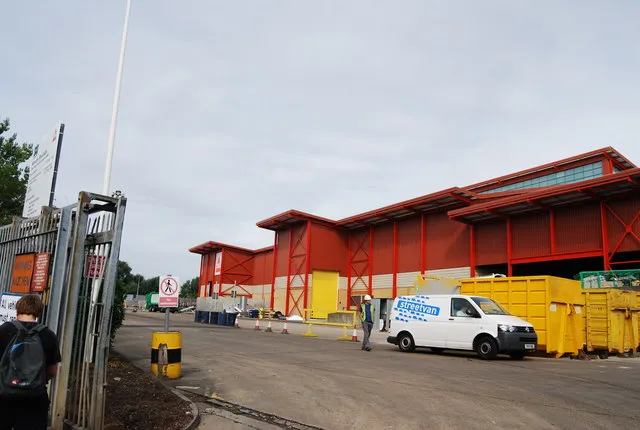
Photo: N Chadwick , CC BY-SA 2.0, via Wikimedia Commons
Waste duty of care has been part of the UK regulatory landscape since the Environmental Protection Act 1990, yet many organisations still manage it as an administrative ritual. A laminated notice in a waste compound, a signed transfer note filed without review and an annual contractor check are presented as assurance. They are not. Duty of care is a live operating control, and boards should treat it with the same discipline they apply to health and safety, financial controls or environmental permitting.
From paperwork to operating control
The legal principle is straightforward: those who produce, keep, treat, carry or dispose of controlled waste must take reasonable steps to ensure it is handled lawfully and does not escape control. In practice, the risk sits in the gaps between functions. Procurement selects the contractor, operations manages the compound, finance pays the invoice and environment teams maintain the paperwork. If no single owner has end-to-end visibility, the organisation can hold perfect documents while waste moves through an unverified route.
A board-level assurance model should therefore test whether duty of care is operating, not merely whether documents exist. It should answer five questions: who is verifying contractors, what evidence is retained, how sites are audited, how exceptions are reported and what happens when waste routes or contractors change.
Contractor verification as a continuing control
Contractor verification is often treated as an onboarding event. It should be a continuing control. Boards should require confirmation that waste carriers are registered, that permitted sites hold appropriate authorisations and that any exemptions or bespoke permits have been checked against the waste types in scope. Verification should also consider financial stability, insurance, subcontracting arrangements and the contractor’s own duty-of-care controls.
A single check at contract award is insufficient. Registration status can change, permits can be varied or surrendered, and subcontractors can enter the chain without the client’s knowledge. A proportionate assurance model should define re-verification intervals, trigger checks when ownership or operating arrangements change, and require evidence to be retained in a central register rather than a local folder.
Transfer note evidence: completeness, timing and traceability
Waste transfer notes are evidence of a transaction, not proof of lawful end-to-end management. Boards should ask whether the organisation can trace each significant waste stream from production to final recovery or disposal, and whether the evidence is complete, timely and consistent with the contract.
Assurance should test more than the presence of a signature. It should confirm that waste descriptions are accurate, European Waste Catalogue codes are appropriate, quantities reconcile with site records, and the receiving site is authorised for the waste in question. Where transfer notes are produced electronically, access controls and retention arrangements should be clear. Where they are paper-based, the risk of missing or illegible records should be assessed.
Site audits and walkthroughs
A board-level model needs a site-level reality check. Audits should examine waste compounds, storage areas, loading points and documentation against the organisation’s procedures. They should include conversations with operatives, not only a review of files. Common findings include unlabelled containers, mixed waste streams, inadequate covering, missing transfer notes and contractors using unauthorised routes.
Audit frequency should reflect risk, waste volume, site complexity and the number of contractors involved. Findings should be graded, allocated to named owners and tracked to closure. Repeated low-level findings can indicate a weak control environment and should be reported upwards, not buried in a local action log.
Exception reporting and meaningful metrics
Boards need a small number of meaningful indicators rather than a large volume of activity data. Useful metrics may include the proportion of waste streams with verified end destinations, the percentage of transfer notes reviewed for accuracy, overdue contractor re-verifications, audit findings by severity and the time taken to close high-risk actions. Exception reporting should highlight changes in waste routes, unexplained quantity variances and incidents such as rejected loads or unauthorised storage.
Metrics should be presented with context. A rise in transfer note exceptions may reflect better scrutiny rather than deteriorating performance. A fall in reported exceptions may indicate weaker detection. The board’s role is to challenge the story behind the numbers and confirm that the assurance system is sensitive enough to detect problems before regulators or campaigners do.
Change management when routes or contractors change
Duty-of-care failures often occur during change. A new contractor, a revised collection schedule, a site closure or a switch to a different treatment route can break the chain of evidence. Boards should require a documented duty-of-care impact assessment before significant changes are approved. The assessment should confirm contractor verification, permit coverage, transfer note arrangements, site access, contingency plans and communication with operational teams.
Change control should also cover temporary arrangements. Emergency skips, short-term storage and one-off collections are common sources of unverified waste routes. A proportionate model should require the same core checks for temporary arrangements as for routine contracts, with clear authority for exceptions.
Escalation and board reporting
Assurance is only effective if escalation is real. The board should approve a clear escalation threshold covering unauthorised waste routes, missing transfer evidence, contractor registration lapses and regulatory contact. Escalation should reach executive ownership quickly and should trigger a documented investigation, not simply a request for updated paperwork.
A practical board assurance cycle can be simple: an annual duty-of-care review, quarterly exception reporting, risk-based site audits and event-driven checks when contractors or routes change. Each element should have a named owner and evidence trail. The objective is not to create a parallel bureaucracy, but to confirm that the organisation can demonstrate lawful waste management from the point of production to the final destination.
The board’s real question
The board’s real question is not whether the organisation has a waste duty-of-care policy. It is whether the policy is operating when a contractor arrives early, a skip is full, a transfer note is missing or a waste route changes at short notice. If the answer depends on a laminated notice, assurance is weak. If it depends on verified contractors, traceable evidence, independent site checks and visible escalation, duty of care is behaving as an operational control rather than a poster.