The Permit File and the Foam Store: PFAS Evidence for UK Site Operators
PFAS is rarely a single substance on a single permit line. It is a family of chemicals that can arrive on site in firefighting foam, specialist industrial fluids, coatings, sealants, lubricants and imported articles, then persist in soil, water, sediment and drainage systems. For UK permit holders, the practical question is no longer whether PFAS is an interesting environmental topic. It is whether the site can produce a coherent evidence base when a regulator, insurer, buyer or contractor asks for one.
The Environment Agency and the other UK regulators have been building their understanding of PFAS through monitoring, incident response and permit review. Trade effluent consents, pollution incident response plans, waste returns and site condition surveys can all become routes through which PFAS questions surface. In 2026, the sensible posture is to treat PFAS as a permit-file discipline: an inventory, a sampling rationale, containment evidence and a substitution plan that can be explained without contradiction.
Why PFAS lands on the permit file
Most operators do not hold a permit condition that says “manage PFAS” in those words. The exposure is usually indirect. A firewater run-off assessment may need to account for foam use. A trade effluent consent may require the operator to know what is being discharged. A waste classification or hazardous waste consignment may depend on whether PFAS-containing materials have been identified. A pollution incident, even a small one, can prompt questions about foam stocks, bunds and drainage isolation.
The regulatory landscape is also tightening. PFOS, PFOA and PFHxS are restricted under UK REACH, and work on a broader approach to PFAS continues. The Stockholm Convention listings provide a international backdrop. For operators, the direction of travel matters less than the need for site-specific evidence: what is present, where it is used, where it could go and what controls stand between it and the environment.
Start with an inventory, not a sampling plan
A common mistake is to commission sampling before the site has mapped its potential PFAS sources. Sampling without a source hypothesis produces data that is difficult to interpret and easy to challenge. The inventory should begin at the desk and move through the yard.
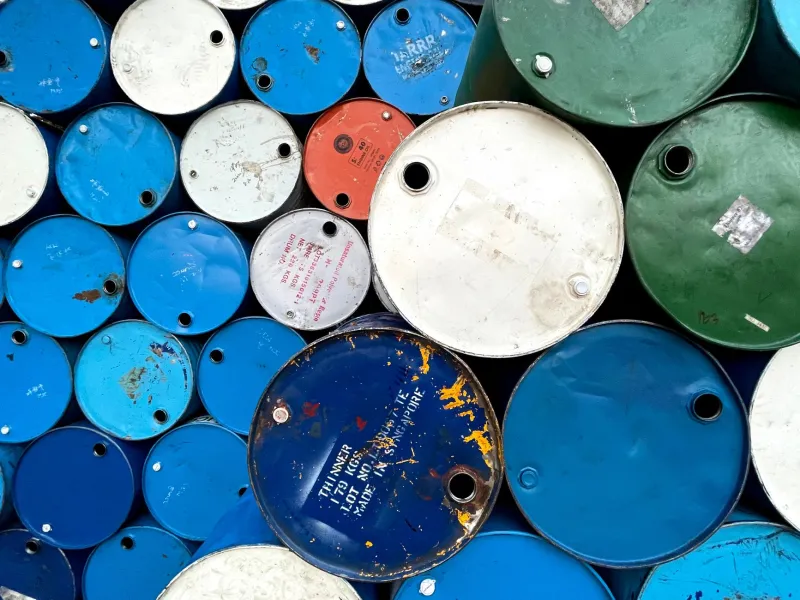
Useful lines of enquiry include: current and historic firefighting foam stocks, including redundant drums, service records and foam system test records; supplier safety data sheets and declarations for specialist fluids and coatings; maintenance records for plant that uses fluorinated lubricants or sealants; purchase histories that may reveal legacy products; and waste transfer notes for sludges, filter media, absorbents and off-specification materials. The inventory should also record where these materials are stored, dispensed, cleaned up and drained.
A site drainage plan is essential. PFAS does not respect organisational boundaries. Foam test water, wash-down, bund overflows and surface water run-off can move contaminants into lagoons, interceptors, soakaways, sewers or controlled waters. The inventory should link each potential source to a drainage route and a receptor, however simple that link appears on paper.
Sampling that answers a regulatory question
Targeted sampling is more defensible than a scattergun approach. The analytical suite should reflect the site’s likely PFAS profile and the questions being asked. Laboratories should be accredited for the methods used, with documented limits of detection and quality assurance. Sampling locations should be justified: upstream and downstream of a potential source, sediment in a lagoon, groundwater at a downgradient borehole, soil beneath a foam store, or sludge from a treatment unit.
Operators should also be clear about what the results will be used for. A screening exercise to prioritise action is different from a compliance demonstration or a due diligence dataset. The sampling plan should record the objective, the sampling method, the handling and preservation arrangements, and the lines of evidence that will sit alongside the laboratory report. A single exceedance without context can cause unnecessary alarm; a dataset without a rationale can fail to satisfy the regulator.
Containment evidence
Containment is where paper evidence and physical condition need to meet. Bunds should be intact and appropriately sized. Interceptors should be maintained and have recorded inspection dates. Foam system discharges should be routed to a contained location or isolated by a documented procedure. Spill kits should be suitable for the materials on site and checked as part of routine inspection.
Evidence can take many forms: drainage drawings, bund integrity checks, maintenance logs, isolation valve registers, exercise reports, photographs with dates, and waste transfer notes for spent absorbents. The test is whether a third party could follow the paper trail from a foam store to a drainage outfall and see where containment is provided and where it depends on human action. If the answer relies on an experienced operator’s memory, the evidence is weak.
Substitution and transition planning
Substitution is not a simple swap. Fluorine-free firefighting foams are available, but compatibility with existing equipment, test regimes and insurance requirements needs to be assessed. Transition planning should cover the disposal of legacy foam stocks as hazardous waste, cleaning of tanks and pipework, updated emergency procedures and training for staff who may still encounter older stocks.
For industrial fluids and coatings, supplier declarations become important. Operators should ask suppliers whether products contain PFAS, request written confirmation and keep that confirmation with the purchase record. Where substitution is not yet feasible, the site should be able to explain why, what alternatives have been considered and what interim controls are in place. A documented review is more persuasive than an assertion that no alternative exists.
Governance and the paper trail
PFAS readiness is ultimately a governance issue. Someone should own the inventory. Permit reviews should test whether PFAS assumptions remain valid. Procurement should capture supplier declarations. Incident response plans should address foam and PFAS-containing materials explicitly. Contractors working on drainage, tank cleaning or waste removal should be briefed on the site’s controls and provide the relevant consignment documentation.
Board-level assurance does not require a deep technical treatise. It requires a clear statement of the site’s PFAS profile, the controls in place, the evidence available and the actions under way. That is the same material a regulator is likely to want to see.
A readiness agenda for 2026
For UK permit holders, the practical agenda is straightforward: build a source inventory, map drainage and receptors, design targeted sampling with a clear objective, assemble containment evidence, and set out a substitution and transition plan. None of this guarantees that PFAS will never become a permit condition. It does mean that when the question arrives, the answer is already in the file.