Water, Watts and the Standby Set: Environmental Permitting for UK Data Centres in 2026
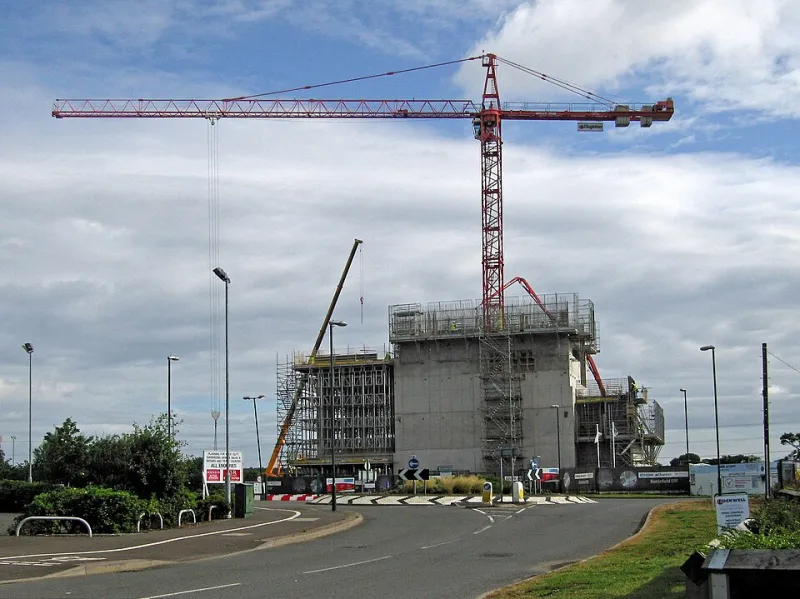
Data centres have moved from the margins of UK environmental regulation to somewhere near the centre of it. Hyperscale schemes in the Thames Valley, South Wales, the North East and the Central Belt now sit alongside a dense estate of colocation facilities, and each one consumes water, draws substantial electrical load and keeps a bank of standby generation ready for the moment the grid falters. Regulators have noticed. The Environment Agency, Natural Resources Wales, SEPA and Northern Ireland's NIEA are all asking sharper questions at pre-application stage, and planning committees are increasingly unwilling to approve schemes that cannot demonstrate control of water and noise impacts.
For operators and their advisers, the compliance picture is not one permit but a mosaic. This article sets out where the obligations sit and where operational risk tends to accumulate.
Where the regulatory perimeter actually sits
There is no single 'data centre permit'. Obligations arise from the activity rather than the building type. A facility may hold, or need, an environmental permit under the Environmental Permitting (England and Wales) Regulations 2016 for combustion plant; an abstraction licence under the Water Resources Act 1991; a discharge consent or trade effluent agreement; and separate duties under the F-gas regime, hazardous substances controls and planning conditions that function as de facto operating limits.
Large schemes may also cross into the nationally significant infrastructure regime, where the examining authority will expect a consolidated environmental statement covering water resources, flood risk, noise and biodiversity net gain. The practical consequence is sequencing: the permit applications, the planning submission and the grid connection agreement must tell the same story about load, hours and water demand. Inconsistency between them is one of the most common findings in diligence and in post-consent review.
Water: abstraction, discharge and the stress map
Cooling strategy determines the water profile, and the water profile determines regulatory exposure. Direct evaporative cooling in a water-stressed catchment invites scrutiny that air-cooled or closed-loop designs largely avoid. Operators should begin by establishing whether the site sits within an area of serious water stress, and whether the local supply strategy depends on a water neutrality requirement or a catchment-specific offset.
Any abstraction above the statutory threshold requires a licence, and the Agency's long-running reform programme has narrowed the tolerance for poorly evidenced applications. Expect the regulator to ask for a full water balance, consumption factors by season, a demonstrated hierarchy of demand reduction, and clarity on the difference between peak and annual figures. Where the design includes aquifer storage, rainwater harvesting or greywater reuse, the treatment and storage elements may themselves require permitting.
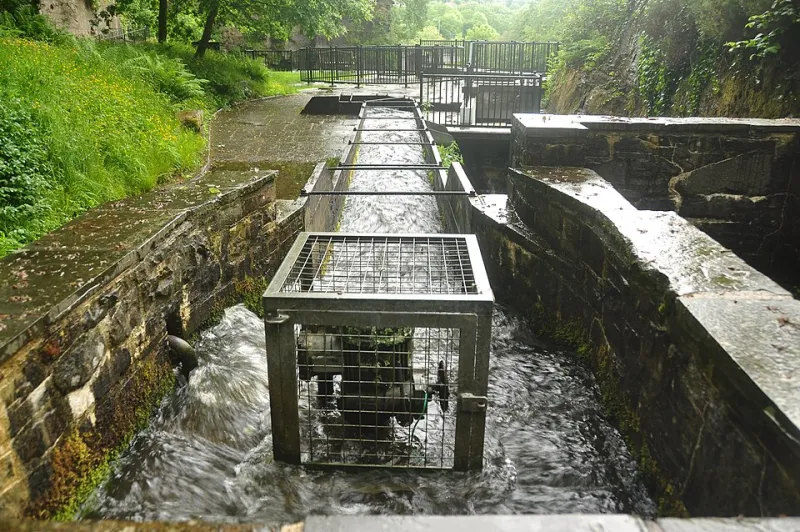
Discharge matters just as much. Blowdown to sewer needs a trade effluent consent from the sewerage undertaker, with limits on volume, temperature and chemistry. Discharge to a watercourse or surface water drain requires a permit and, in most cases, a robust dilution and mixing argument. Reverse osmosis reject streams are frequently underestimated; they are concentrated, consistent and visible.
Standby generation: the permit behind the diesel
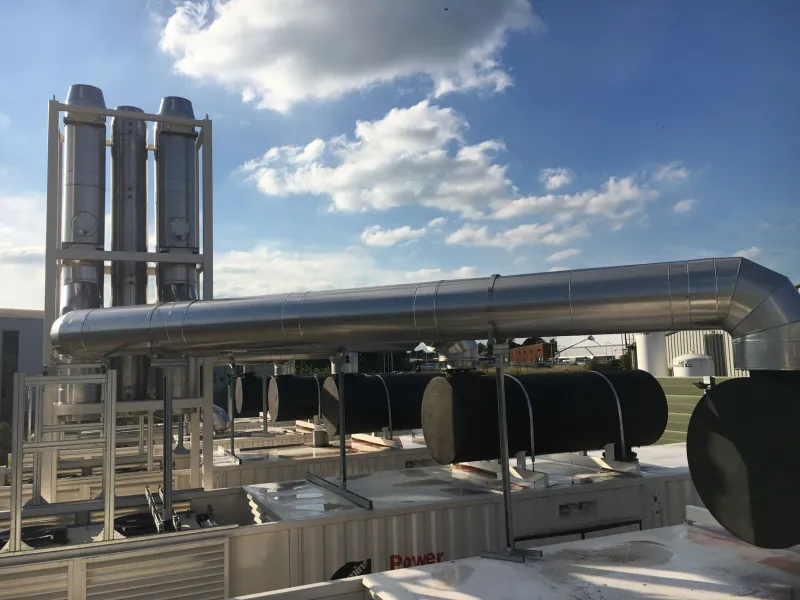
Standby plant is the area where operators most often discover a gap between design intent and legal position. Combustion plant with a rated thermal input at or above 1 MW falls within the Medium Combustion Plant regime, and units at or above 50 MW fall under the Industrial Emissions Directive. Specified generators face restricted operating hours — commonly 500 hours a year unless a derogation applies — and that figure is not a licence to test whenever convenient.
Two risks follow. First, emissions monitoring and reporting obligations apply even to plant that runs rarely, and records must be defensible. Second, the permitted hours must be reconciled with the resilience case. If the site's business continuity plan assumes extended island-mode operation, the permit, the fuel storage arrangements and the air quality assessment must all support that assumption. Fuel polishing, bunding, leak detection and delivery logistics belong in the same operational procedure as the emissions log.
Battery energy storage co-located with the campus brings its own permitting questions, from fire water containment to the classification of the site under hazardous substances controls.
Noise, refrigerants and firewater
Cooling towers, chillers and generator test runs are the three most common sources of complaint. Assessment against BS 4142, with tonal and impulsive corrections applied honestly, should form part of the design rather than a post-complaint exercise. Where a site is already operating, ambient monitoring before and during a test run provides far stronger evidence than modelling alone.
Refrigerant management sits under the F-gas regime: leak checks at the prescribed frequency, certified personnel, records retained, and a clear plan for phasing down higher-GWP charges. Fire suppression systems using fluorinated foams warrant a separate review, given the direction of travel on PFAS and the practical difficulty of disposing of contaminated firewater. Containment, isolation and a tested disposal route are the controls regulators will look for.
The sustainability ledger: reporting, heat and grid
Beyond permitting, the reporting burden is growing. Streamlined Energy and Carbon Reporting and the Energy Savings Opportunity Scheme capture many larger operators, and the direction of policy on data centre energy reporting and heat reuse points towards greater transparency rather than less. Operators that can present verified power usage effectiveness, water usage effectiveness and, where relevant, heat export data will find themselves better placed than those relying on nameplate estimates.
Grid constraints deserve a parallel track. Connection dates, capacity agreements and any demand-side flexibility commitments should be stress-tested against the operating scenario, because a delayed connection can push load onto standby plant — and straight into a permit limit.
A practical pre-application checklist
- Map every regulated activity to its instrument: permit, licence, consent or planning condition.
- Produce a seasonal water balance and confirm abstraction thresholds and availability.
- Agree the blowdown and reject-stream disposal route in writing before construction.
- Confirm combustion plant classification and permitted operating hours against the resilience case.
- Commission baseline noise monitoring, including night-time and tonal assessment.
- Document refrigerant inventory, leak-check schedule and phase-down exposure.
- Review firewater containment and foam management against current PFAS expectations.
- Reconcile the planning submission, permit application and grid agreement.
- Assign ownership of each obligation to a named role with a review cycle.
Conclusion
The environmental risk profile of a UK data centre is concentrated in a handful of areas — water, combustion, noise and refrigerants — but the documentation burden is spread across many regimes. The operators who manage this well treat permitting as a design discipline rather than an administrative afterthought, and they build the evidence trail before the regulator asks for it. In a market where speed to capacity is the commercial imperative, that discipline is what keeps a scheme deliverable.